Publications
A list of peer-reviewed abstract, conference proceedings, preprints, and journal articles. An asterisk (*) indicates equal contribution.
2026
-
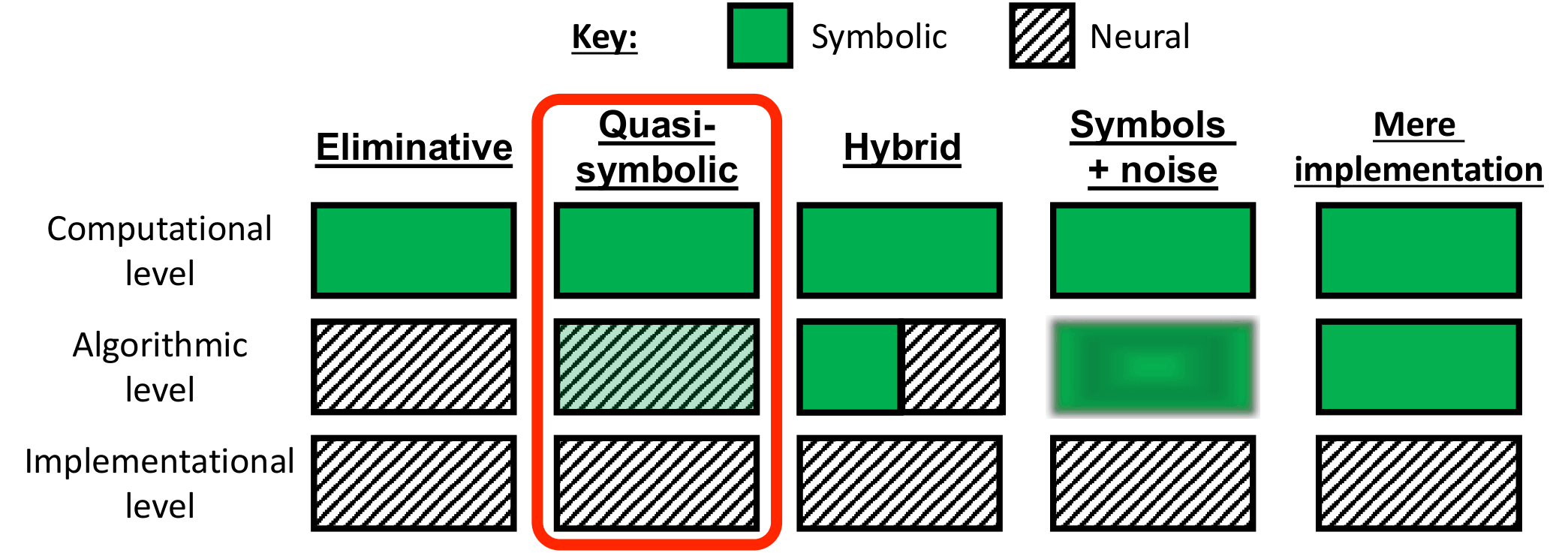 Reconciling Symbols and Neural Networks: Evidence for a Quasi-Symbolic ViewR. Thomas McCoy, Abigail L. Tenenbaum, Zhang Enyan, and Zhenghao Herbert ZhouCurrent Opinion in Behavioral Sciences, 2026
Many domains of cognition, such as language and reasoning, have traditionally been modeled with symbolic systems. However, in both biological and artificial intelligence, some of the most advanced systems in these domains are neural networks, despite the fact that neural networks appear fundamentally different from symbolic systems. What, then, is the relationship between neural computation and symbolic behavior? In this paper, we review recent literature that analyzes the internal mechanisms used by neural networks from AI. We conclude that this line of work supports a quasi-symbolic view of cognition, in which the mind uses computation that is approximately symbolic but with some important non-symbolic properties that derive from the mind’s neural underpinnings.
@article{mccoy_etal-2026-quasi-symbolic, title = {{Reconciling} {Symbols} and {Neural} {Networks}: {Evidence} for a {Quasi}-{Symbolic} {View}}, author = {McCoy, R. Thomas and Tenenbaum, Abigail L. and Enyan, Zhang and Zhou, Zhenghao Herbert}, year = {2026}, journal = {Current Opinion in Behavioral Sciences}, volume = {72}, pages = {101686}, } -
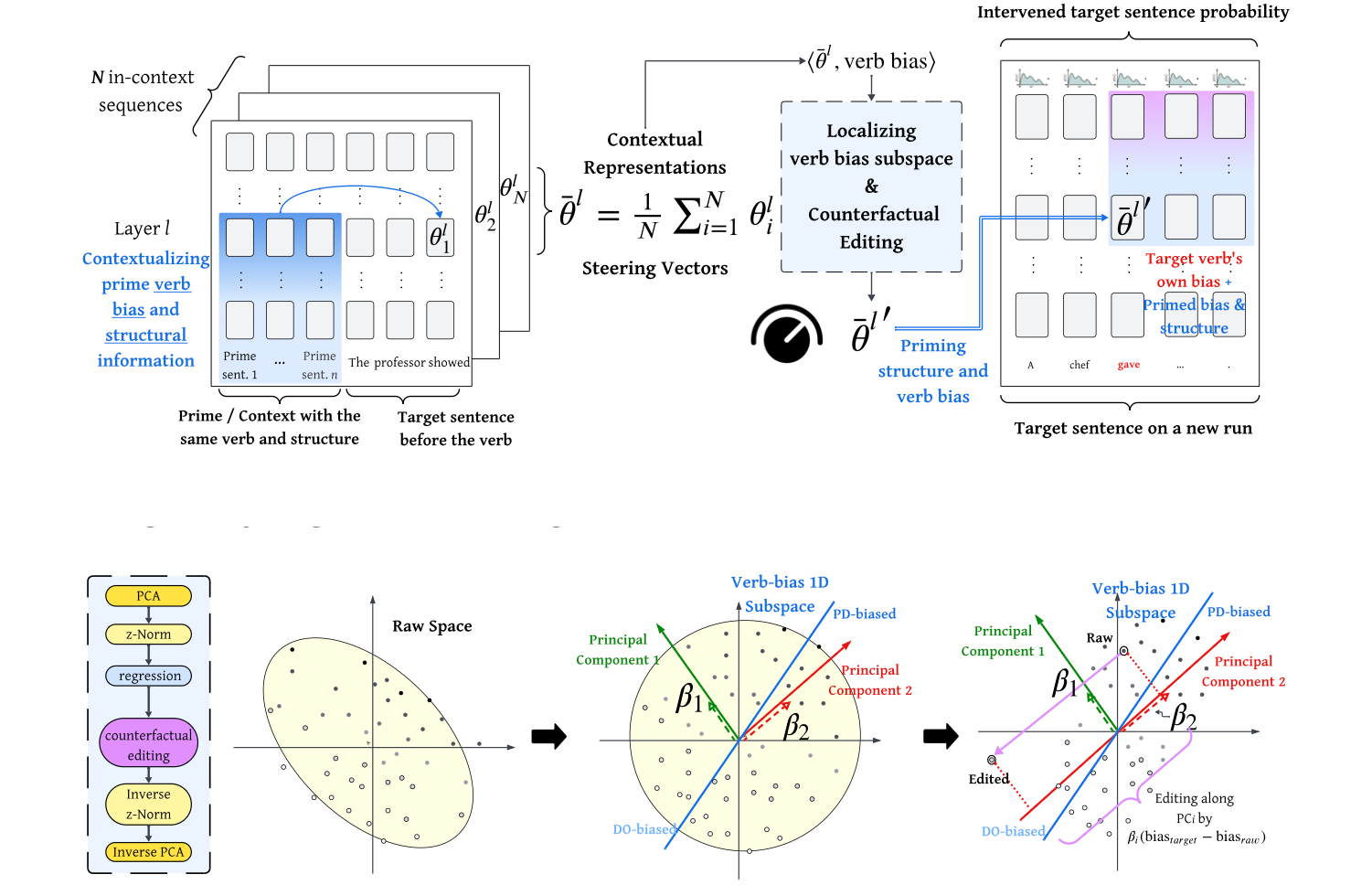 Causal Interventions on Continuous Variables: A Case Study on Verb Bias in Steering Vectors for In-Context LearningZhenghao Herbert Zhou, R. Thomas McCoy, and Robert FrankIn Proceedings of the 2026 Conference on Empirical Methods in Natural Language Processing (EMNLP), Oct 2026Main paper; Preprint available at arXiv:2605.29971 [cs.CL]
Causal interventions in language model representations have largely targeted discrete features, like grammatical number. However, language models must also make use of features that are graded. We introduce a method for causal intervention on continuous variables: given activation vectors paired with a graded target variable, we localize a low-dimensional direction for that variable and use this direction to edit vectors toward counterfactual target values. We apply this method to a continuous feature that is well-studied in psycholinguistics, namely verb bias (which reflects which syntactic structures tend to follow a given verb). We show that verb bias is causally represented in steering vectors extracted from large language models: counterfactual edits to verb bias systematically shift downstream structural preferences. Verb bias has also previously been linked to in-context learning; in further analyses, we find that steering vectors in our experiments encode error signals that could drive the error-driven update behavior seen in in-context learning but that these aspects of the steering vectors are not causally used in downstream production. Overall, these results show causal interventions can be applied to continuous variables, though connecting continuous variables to in-context learning remains a challenge.
@inproceedings{zhou_etal-2026-continuous, title = {{Causal} {Interventions} on {Continuous} {Variables}: {A} {Case} {Study} on {Verb} {Bias} in {Steering} {Vectors} for {In}-{Context} {Learning}}, url = {https://arxiv.org/abs/2605.29971}, author = {Zhou, Zhenghao Herbert and McCoy, R. Thomas and Frank, Robert}, year = {2026}, month = oct, address = {Budapest, Hungary}, publisher = {Association for Computational Linguistics}, booktitle = {Proceedings of the 2026 Conference on Empirical Methods in Natural Language Processing ({EMNLP})}, note = {Main paper; Preprint available at arXiv:2605.29971 [cs.CL]}, } -
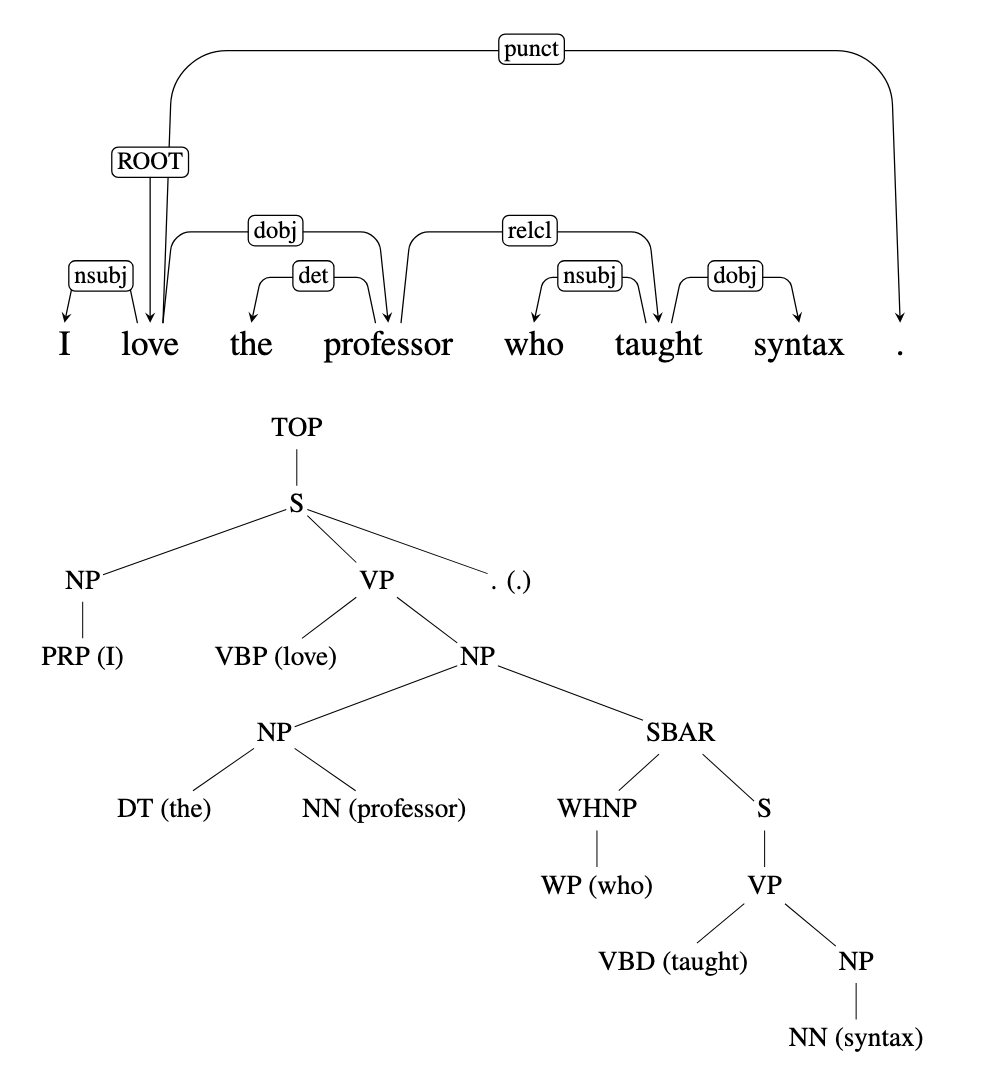 What Exactly do Children Receive in Language Acquisition? A Case Study on CHILDES with Automated Detection of Filler-Gap DependenciesZhenghao Herbert Zhou, William Dai, Maya Viswanathan, Simon Charlow, R. Thomas McCoy, and 1 more authorIn Proceedings of the 30th Conference on Computational Natural Language Learning (CoNLL 2026), pages 692–706, Jul 2026
Children’s acquisition of filler-gap dependencies has been argued by some to depend on innate grammatical knowledge, while others suggest that the distributional evidence available in child-directed speech suffices. Unfortunately, the relevant input is difficult to quantify at scale with fine granularity, making this question difficult to resolve. We present a system that identifies three core filler-gap constructions in spoken English corpora – matrix wh-questions, embedded wh-questions, and relative clauses – and further identifies the extraction site (i.e., subject vs. object vs. adjunct). Our approach combines constituency and dependency parsing, leveraging their complementary strengths for construction classification and extraction site identification. We validate the system on human-annotated data and find that it scores well across most categories. Applying the system to 57 English CHILDES corpora, we are able to characterize children’s filler-gap input and their filler-gap production trajectories over the course of development, including construction-specific frequencies and extraction-site asymmetries. The resulting fine-grained labels enable future work in both acquisition and computational studies, which we demonstrate with a case study using filtered corpus training with language models.
@inproceedings{zhou_etal-2026-conll, title = {{What} {Exactly} do {Children} {Receive} in {Language} {Acquisition}? {A} {Case} {Study} on {CHILDES} with {Automated} {Detection} of {Filler}-{Gap} {Dependencies}}, author = {Zhou, Zhenghao Herbert and Dai, William and Viswanathan, Maya and Charlow, Simon and McCoy, R. Thomas and Frank, Robert}, url = {https://aclanthology.org/2026.conll-main.42/}, doi = {10.18653/v1/2026.conll-main.42}, editor = {Bonial, Claire and Berzak, Yevgeni}, year = {2026}, month = jul, address = {San Diego, California}, publisher = {Association for Computational Linguistics}, booktitle = {Proceedings of the 30th {Conference} on {Computational} {Natural} {Language} {Learning} ({CoNLL} 2026), pages 692--706}, pages = {692--706}, } -
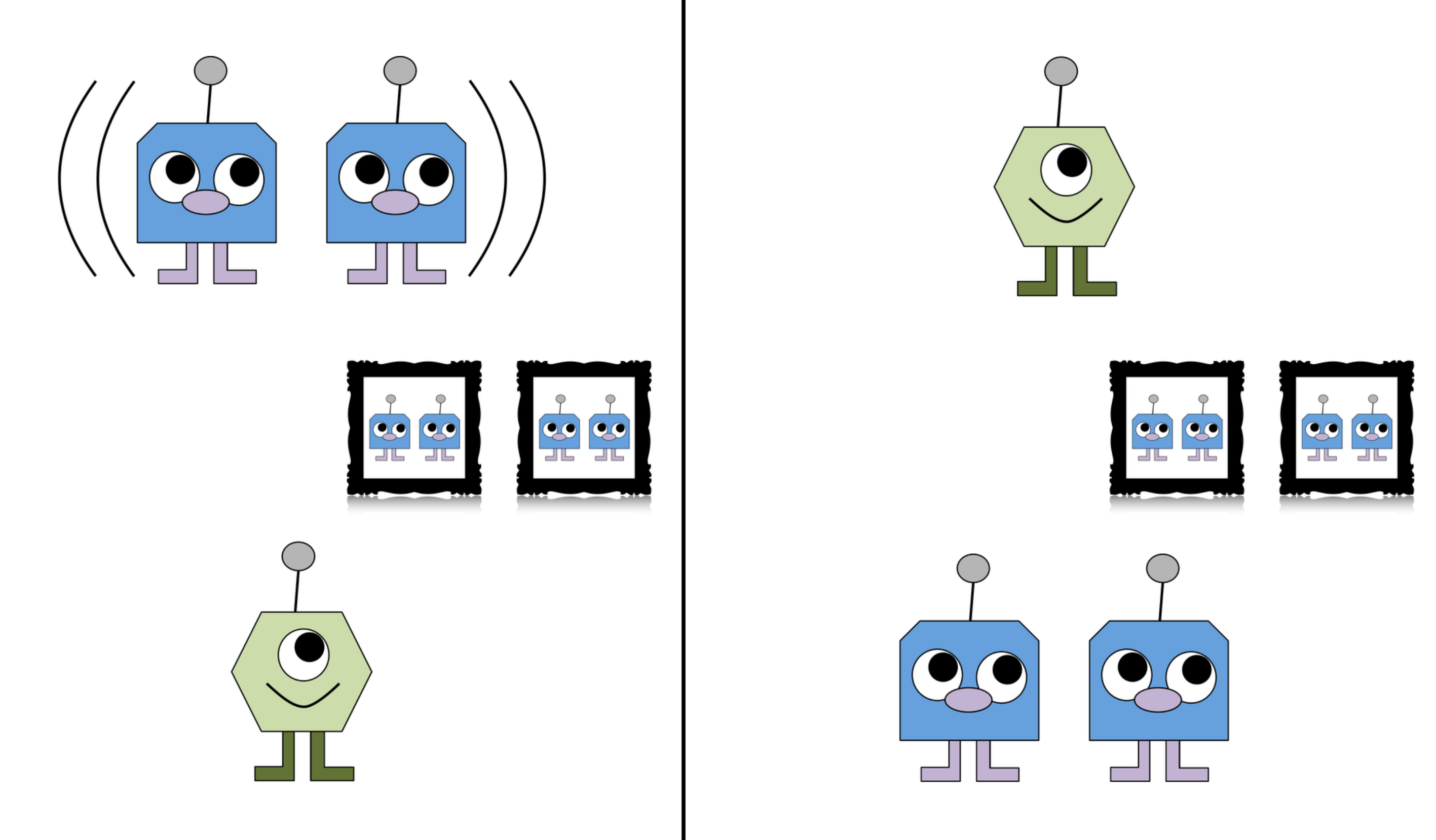 More Than One Agreement Planning Mechanism: Reflexive Number Source Sensitive to Syntactic StructuresZhenghao Herbert Zhou, and Yuyang LiuIn Proceedings of the Annual Meeting of the Cognitive Science Society., Jul 2026
Prior studies on agreement attraction in sentence production have investigated the differences in verb and reflexive agreement planning, as evidenced by a distinction in their error rates. This study investigated two possible accounts: Planning Order, where verbs and reflexives share the same underlying mechanism that is applied at different stages, and Number Source, where verbs and reflexives retrieve features from different sources. To further adjudicate between the two, we extended the empirical ground to reflexives in complement and adjunct positions. Results replicated previous findings on the distinction between verbs and reflexives, while no significant difference was found in attraction effects among reflexive conditions, thereby supporting Number Source. Predicted by neither account, we novelly observed a significant increase in baseline error rate for adjunct but an insignificant increase for complement, suggesting a finer-grained Number Source model sensitive to syntactic structural differences.
@inproceedings{zhou-2026-cogsci,
  title = {{More} {Than} {One} {Agreement} {Planning} {Mechanism}: {Reflexive} {Number} {Source} {Sensitive} to {Syntactic} {Structures}},
  author = {Zhou, Zhenghao Herbert and Liu, Yuyang},
  url = {https://escholarship.org/uc/item/011439jt},
  year = {2026},
  month = jul,
  address = {Rio de Janeiro, Brazil},
  booktitle = {{Proceedings} of the {Annual} {Meeting} of the {Cognitive} {Science} {Society}.},
}


2025
-
 Causal Interventions on Continuous Features in LLMs: A Case Study in Verb BiasZhenghao Herbert Zhou, R. Thomas McCoy, and Robert FrankIn First Workshop on CogInterp: Interpreting Cognition in Deep Learning Models (CogInterp)., Dec 2025
@inproceedings{zhou_etal-2025-causal, title = {{Causal} {Interventions} on {Continuous} {Features} in {LLM}s: {A} {Case} {Study} in {Verb} {Bias}}, author = {Zhou, Zhenghao Herbert and McCoy, R. Thomas and Frank, Robert}, year = {2025}, month = dec, address = {San Diego, California}, booktitle = {First Workshop on CogInterp: Interpreting Cognition in Deep Learning Models (CogInterp).}, } -
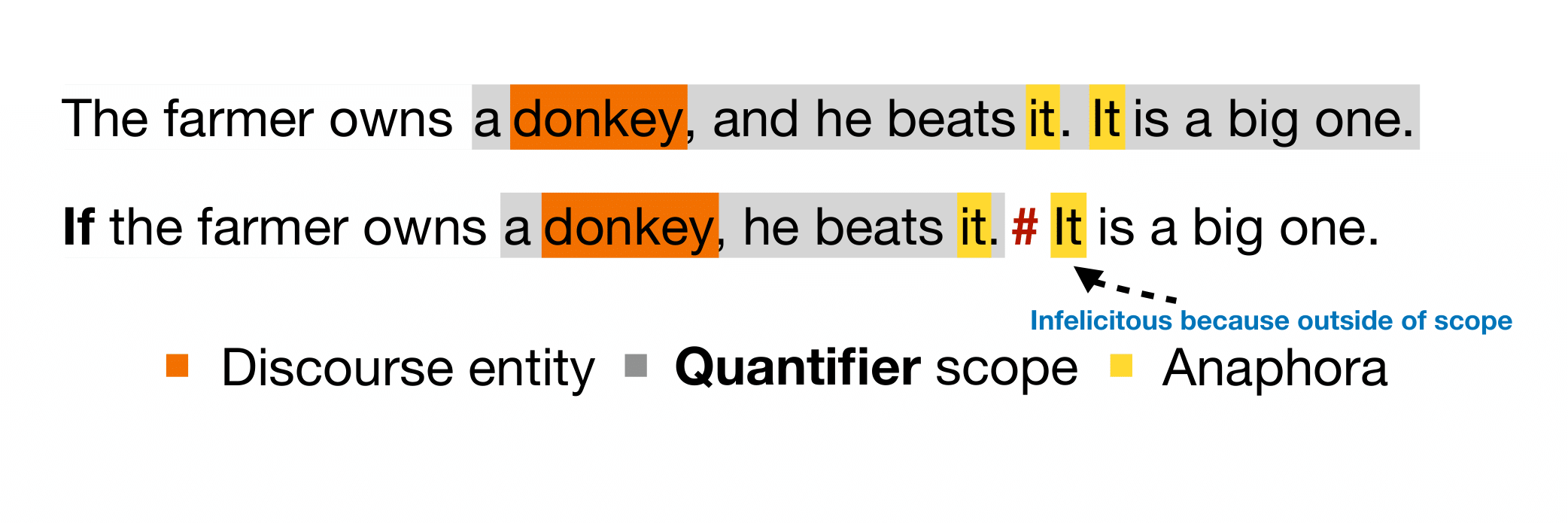 Meaning Beyond Truth Conditions: Evaluating Discourse Level Understanding via Anaphora AccessibilityXiaomeng Zhu*, Zhenghao Zhou*, Simon Charlow, and Robert FrankIn Proceedings of the 63rd Annual Meeting of the Association for Computational Linguistics (Volume 1: Long Papers), pages 8824–8842, Vienna, Austria. Association for Computational Linguistics., Jul 2025
We present a hierarchy of natural language understanding abilities and argue for the importance of moving beyond assessments of understanding at the lexical and sentence levels to the discourse level. We propose the task of anaphora accessibility as a diagnostic for assessing discourse understanding, and to this end, present an evaluation dataset inspired by theoretical research in dynamic semantics. We evaluate human and LLM performance on our dataset and find that LLMs and humans align on some tasks and diverge on others. Such divergence can be explained by LLMs’ reliance on specific lexical items during language comprehension, in contrast to human sensitivity to structural abstractions.
@inproceedings{zhu-etal-2025-meaning, title = {Meaning {Beyond} {Truth} {Conditions}: {Evaluating} {Discourse} {Level} {Understanding} via {Anaphora} {Accessibility}}, shorttitle = {Evaluating {Discourse} {Level} {Understanding} via {Anaphora} {Accessibility}}, url = {https://aclanthology.org/2025.acl-long.432/}, urldate = {2025-07-26}, editor = {Che, Wanxiang and Nabende, Joyce and Shutova, Ekaterina and Pilehvar, Mohammad Taher}, publisher = {Association for Computational Linguistics}, author = {Zhu, Xiaomeng and Zhou, Zhenghao and Charlow, Simon and Frank, Robert}, month = jul, year = {2025}, address = {Vienna, Austria}, pages = {8824--8842}, isbn = {979-8-89176-251-0}, booktitle = {{Proceedings} of the 63rd {Annual} {Meeting} of the {Association} for {Computational} {Linguistics} ({Volume} 1: {Long} {Papers}), pages 8824–8842, {Vienna}, {Austria}. {Association} for {Computational} {Linguistics}.}, } -
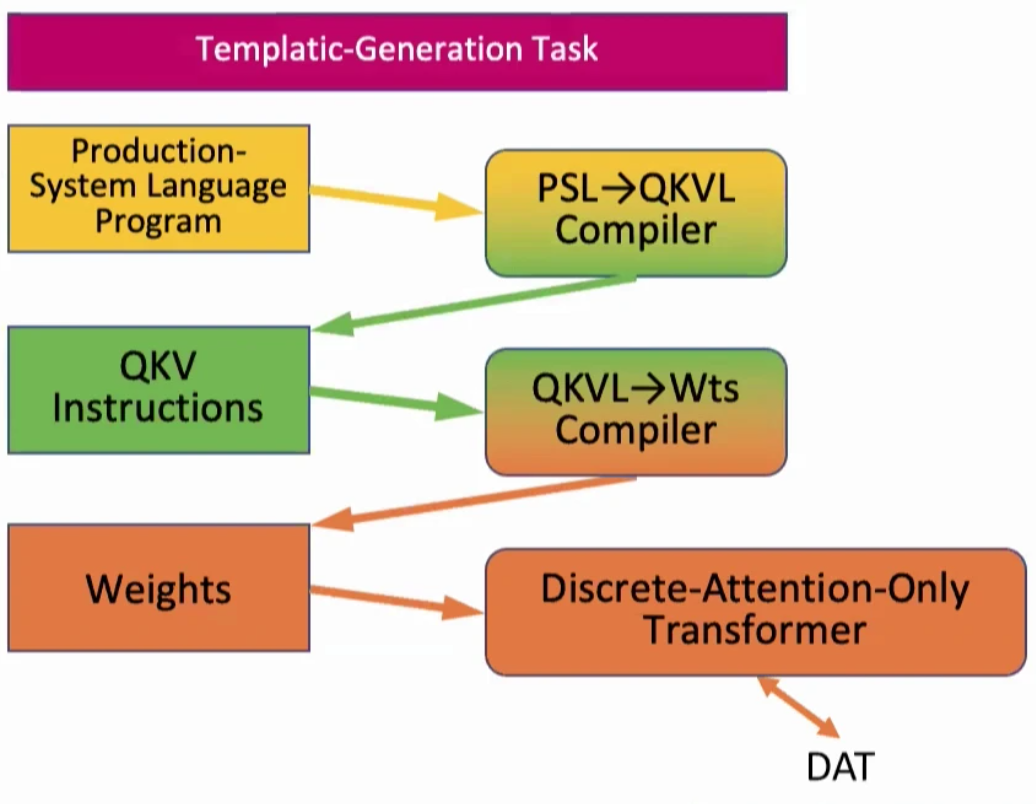 Mechanisms of Symbol Processing for In-Context Learning in Transformer NetworksPaul Smolensky, Roland Fernandez, Zhenghao Herbert Zhou, Mattia Opper, Adam Davies, and 1 more authorIn Journal of Artificial Intelligence Research (JAIR) Vol. 84, Nov 2025
Large Language Models (LLMs) have demonstrated impressive abilities in symbol processing through in-context learning (ICL). This success flies in the face of decades of critiques asserting that artificial neural networks cannot master abstract symbol manipulation. We seek to understand the mechanisms that can enable robust symbol processing in transformer networks, illuminating both the unanticipated success, and the significant limitations, of transformers in symbol processing. Borrowing insights from symbolic AI and cognitive science on the power of Production System architectures, we develop a high-level Production System Language, PSL, that allows us to write symbolic programs to do complex, abstract symbol processing, and create compilers that precisely implement PSL programs in transformer networks which are, by construction, 100% mechanistically interpretable. The work is driven by study of a purely abstract (semantics-free) symbolic task that we develop, Templatic Generation (TGT). Although developed through study of TGT, PSL is, we demonstrate, highly general: it is Turing Universal. The new type of transformer architecture that we compile from PSL programs suggests a number of paths for enhancing transformers’ capabilities at symbol processing. We note, however, that the work we report addresses computability, and not learnability, by transformer networks.
@inproceedings{smolensky_tgt_2025, title = {Mechanisms of {Symbol} {Processing} for {In}-{Context} {Learning} in {Transformer} {Networks}}, shorttitle = {Mechanisms of {Symbol} {Processing} in {Transformers}}, url = {https://www.jair.org/index.php/jair/article/view/17469}, doi = {https://doi.org/10.1613/jair.1.17469}, urldate = {2025-11-30}, publisher = {Journal of Artificial Intelligence Research}, author = {Smolensky, Paul and Fernandez, Roland and Zhou, Zhenghao Herbert and Opper, Mattia and Davies, Adam and Gao, Jianfeng}, month = nov, year = {2025}, booktitle = {Journal of {Artificial} {Intelligence} {Research} (JAIR) Vol. 84}, } -
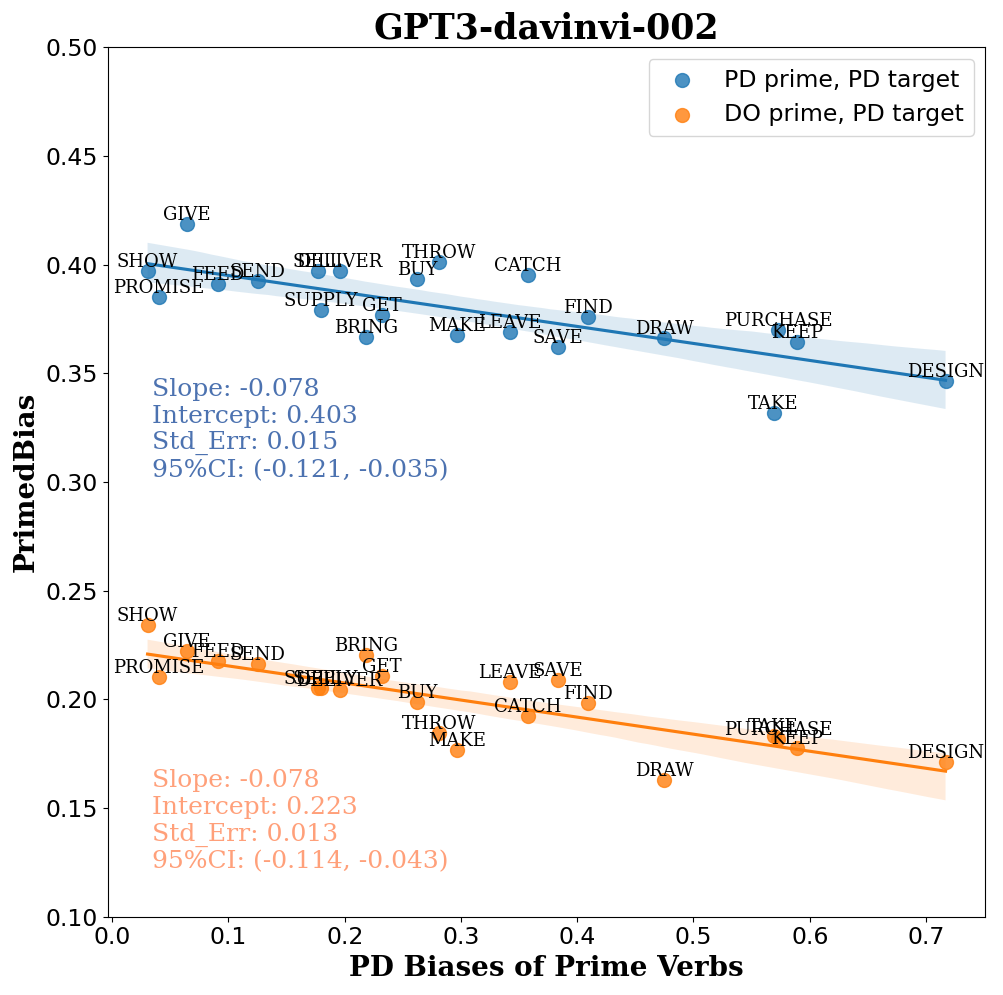 Is In-Context Learning a Type of Error-Driven Learning? Evidence from the Inverse Frequency Effect in Structural PrimingZhenghao Zhou, Robert Frank, and R. Thomas McCoyIn Proceedings of the 2025 Conference of the Nations of the Americas Chapter of the Association for Computational Linguistics: Human Language Technologies (Volume 1: Long Papers), Apr 2025
Large language models (LLMs) have shown the emergent capability of in-context learning (ICL). One line of research has claimed that ICL is functionally equivalent to gradient descent, a type of error-driven learning mechanism. In this paper, we introduce a new way of diagnosing whether ICL is functionally performing error-driven learning. Our approach is based on the inverse frequency effect (IFE) —- a phenomenon in which an agent’s behavior is influenced to a greater degree when presented with improbable examples as compared to more likely ones. The IFE has previously been identified in psycholinguistics where humans exhibit the IFE in the context of structural priming (the tendency for people to produce sentence structures they have encountered recently). In that context, the IFE has been used as evidence that human structural priming must involve error-driven learning mechanisms. In our experiments, we simulated structural priming with ICL and found that LLMs indeed display the IFE, with the effect being stronger in larger models. We conclude that at least in the case we studied, ICL is indeed a type of error-driven learning, supporting the hypothesis that an error signal is implicitly computed in the forward pass during ICL. Our results suggest that both humans and LLMs make use of error-driven processing mechanisms in on-line processing.
@inproceedings{zhou-etal-2025-context,
  title = {Is {In}-{Context} {Learning} a {Type} of {Error}-{Driven} {Learning}? {Evidence} from the {Inverse} {Frequency} {Effect} in {Structural} {Priming}},
  urldate = {2025-05-02},
  author = {Zhou, Zhenghao and Frank, Robert and McCoy, R. Thomas},
  editor = {Chiruzzo, Luis and Ritter, Alan and Wang, Lu},
  booktitle = {{Proceedings} of the 2025 {Conference} of the {Nations} of the {Americas} {Chapter} of the {Association} for {Computational} {Linguistics}: {Human} {Language} {Technologies} ({Volume 1}: {Long} {Papers})},
  month = apr,
  year = {2025},
  address = {Albuquerque, New Mexico},
  publisher = {Association for Computational Linguistics},
  url = {https://aclanthology.org/2025.naacl-long.586/},
  pages = {11712--11725},
  isbn = {979-8-89176-189-6},
}


2023
-
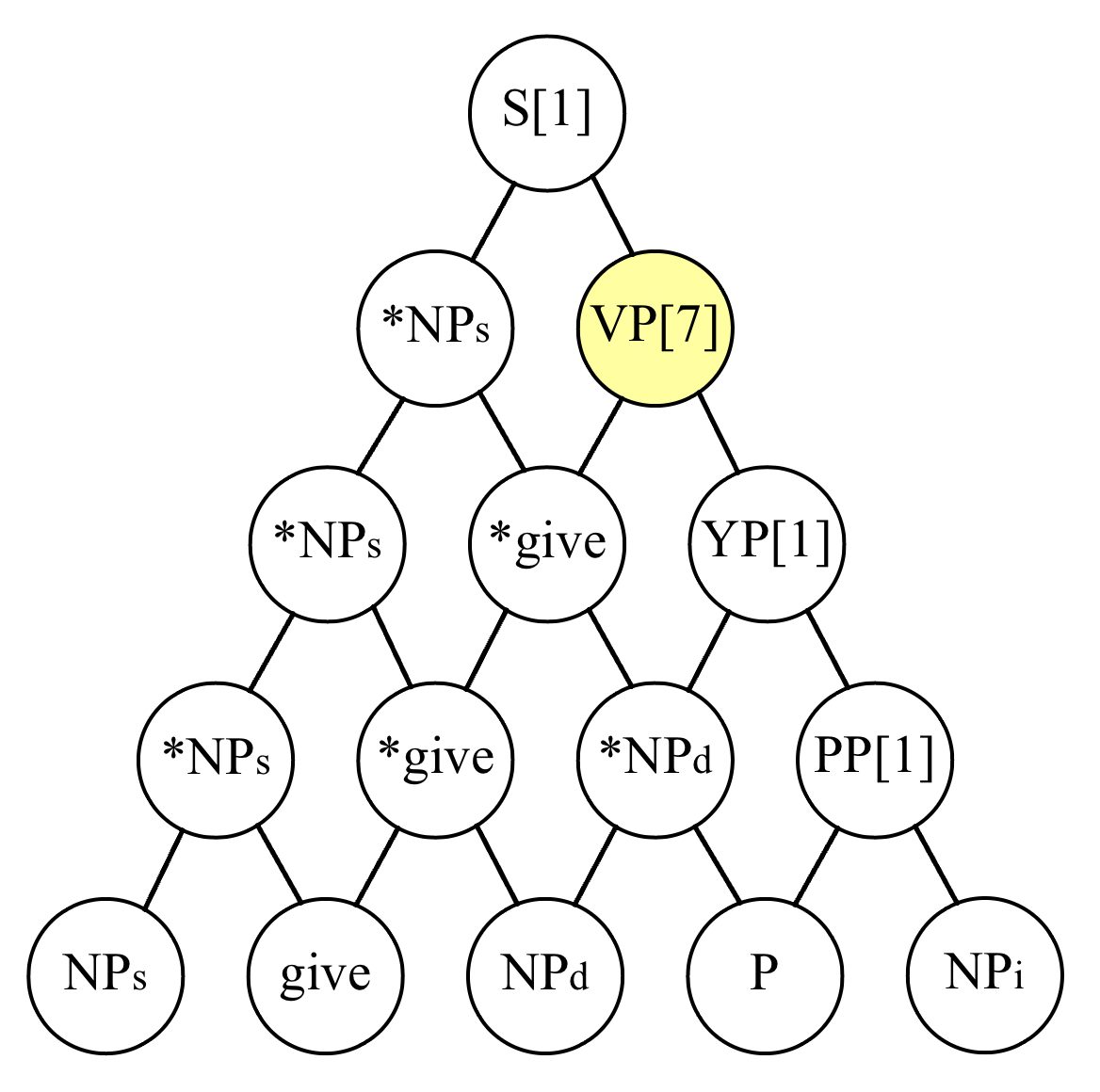 What affects Priming Strength? Simulating Structural Priming Effect with PIPSZhenghao Zhou, and Robert FrankIn Proceedings of the Society for Computation in Linguistics 2023, Jun 2023
The Gradient Symbolic Computation (GSC) framework has been proposed as a general model of human cognitive proessing (Cho et al. 2020, Smolensky et al. 2022). In this study, we use the Parallelism In Producing Syntax (PIPS) model (Brehm et al. 2022), one computational instantiation of the GSC framework, to simulate the structural priming effect (e.g., Bock 1986) in sentence production. We focus on English dative alternation and demonstrate that the PIPS model can qualitatively reproduce the lexically independent priming effect, the lexical boost effect, and under some conditions, the inverse frequency effect shown in humans. This demonstrates the pontential of GSC as a general framework to simulate the process of human sentence production. We leave the underlying mechanisms of how priming effects arises in the PIPS model for future work.
@inproceedings{zhou_what_2023, title = {What affects {Priming} {Strength}? {Simulating} {Structural} {Priming} {Effect} with {PIPS}}, shorttitle = {What affects {Priming} {Strength}?}, author = {Zhou, Zhenghao and Frank, Robert}, booktitle = {Proceedings of the {Society} for {Computation} in {Linguistics} 2023}, month = jun, year = {2023}, volume = {6}, pages = {413--417}, address = {Amherst, MA}, url = {https://openpublishing.library.umass.edu/scil/article/id/947/}, doi = {10.7275/s0rv-1p15}, editor = {Hunter, Tim and Prickett, Brandon}, urldate = {2024-09-02}, } -
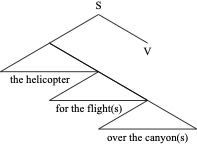 Subject-verb agreement with Seq2Seq transformers: Bigger is better, but still not bestMichael Wilson, Zhenghao Zhou, and Robert FrankIn Proceedings of the Society for Computation in Linguistics 2023, Jun 2023
Past work (Linzen et al., 2016; Goldberg, 2019, a.o.) has used the performance of neural network language models on subject-verb agreement to argue that such models possess structure-sensitive grammatical knowledge. We investigate what properties of the model or of the training regimen are implicated in such success in sequence to sequence transformer models that use the T5 architecture (Raffel et al., 2019; Tay et al., 2021). We find that larger models exhibit improved performance, especially in sentences with singular subjects. We also find that larger pre-training datasets are generally associated with higher performance, though models trained with less complex language (e.g., CHILDES, Simple English Wikipedia) can show more errors when trained with larger datasets. Finally, we show that a modelś ability to replicate psycholinguistic results does not correspondingly improve with more parameters or more training data: none of the models we study displays a fully convincing replication of the hierarchically-informed pattern of agreement behavior observed in human experiments.
@inproceedings{wilson_subject-verb_2023,
  title = {Subject-verb agreement with {Seq2Seq} transformers: {Bigger} is better, but still not best},
  shorttitle = {Subject-verb agreement with {Seq2Seq} transformers},
  author = {Wilson, Michael and Zhou, Zhenghao and Frank, Robert},
  booktitle = {Proceedings of the {Society} for {Computation} in {Linguistics} 2023},
  month = jun,
  year = {2023},
  pages = {278--288},
  address = {Amherst, MA},
  publisher = {Association for Computational Linguistics},
  url = {https://aclanthology.org/2023.scil-1.24},
  doi = {10.7275/d5gb-v650},
  editor = {Hunter, Tim and Prickett, Brandon},
  urldate = {2024-09-02},
  keywords = {subject-verb agreement, transformer language models, sequence to sequence models, agreement attraction},
}

